Number Sense (Fractions and Decimals)
Vad vi kommer jobba med:
Centralt innehåll
Rational numbers and their properties.
The positioning system of numbers in decimal form. The binary number system and number systems used in some cultures through history, such as the Babylonian.
Numbers in fractions and decimals and their use in everyday situations.
Numbers in percentage form and their relation to numbers in fraction and decimal form.
Main methods of calculating using natural numbers and simple numbers in decimal form when calculating approximations, mental arithmetic, and calcu lations using written methods and calculators. Using the methods in different situations.
Strategies for mathematical problem-solving in everyday situations
Mathematical formulation of questions based on everyday situations.
How the assessment/s within the unit will be completed:
Kunskapskrav
Week 40: Lesson 1: Introduction to the Decimal System
Decimal Numbers (decimatal)
Week 40: Lesson 2: Ordering and Comparing Decimals
Review place value terms from last lesson.
Week 40: Lesson 3: Rounding Decimal Numbers
This lesson we will discuss the rules for rounding. When your digit is 4 or less you round down. When the digit is 5 or greater you round the number up. This rule still applies for decimals as it does for whole numbers. We will practise rounding to the nearest whole number as well as to the nearest tenth.
Week 41: Lesson 1: Introduction to Fraction and Decimal Equivalents
Review Rounding Decimal numbers to the nearest whole number and tenth. Introduce a few examples of rounding to the nearest hundredth as well. The rules for rounding stay the same as with whole numbers.
Week 41: Lesson 2: Calculate Fraction and Decimal Equivalents
Regional All Staff Conference
No School.
Week 42: Lesson 1: Adding and Subtracting Decimals
Review steps for adding and subtracting whole numbers.
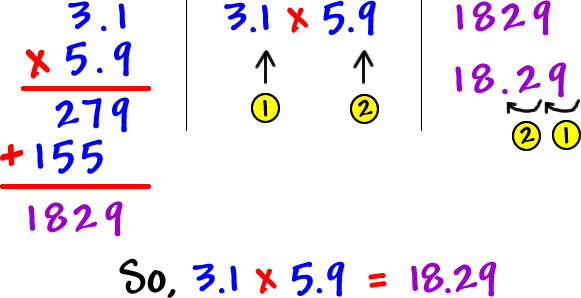
Week 42: Lesson 2: Multiplying with Decimals
Review column multiplication (med uppställning)

Week 42: Lesson 3: Division with Decimals
Review steps for long division.

Week 43: Lesson 1: Continue Division with Decimals
Inte publicerad än
Week 43: Lesson 2: Review of Operations with Decimals
Autumn Break
No Lessons
Autumn Break
No Lessons
Autumn Break
No Lessons
Week 45: Lesson 1: Working with Decimals and Mixed Operations
In this lesson, students will review using a range of operations with decimal values. We will review decimal place values, ordering, rounding and comparing decimals, as well as adding, subtracting, multiplying and dividing decimal numbers.

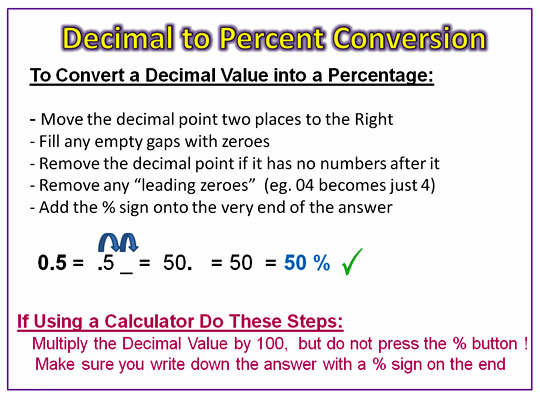
Week 45: Lesson 2: Introduction to Percentages
In this lesson, students will learn to convert decimal numbers to percentages.
Week 45: Lesson 3: Percentages
In this lesson, students will review how to convert fractions to decimals. We will also practise converting between fractions, decimals, and percentages.


Week 46: Lesson 1: Fractions as Division
Students will practise dividing proper and improper fractions to find decimal numbers. We will continue to practise converting these numbers to percentages as well to consolidate the methods before the checkpoint.
Week 46: Lesson 2: Introduction to Equivalent Fractions
Equivalent fractions are two fractions that are equal to one another e.g. 2/10 and 1/5

Week 46: Lesson 3: Equivalent Fractions
Students will review concepts from the last lesson, creating equivalent fractions.


Week 47: Lesson 1: Checkpoint Review
In this lesson,
- ordering and comparing decimal numbers
- rounding decimals to the nearest tenth and hundredth
- adding and subtracting decimal numbers


Week 47: Lesson 2: Checkpoint Review
In today's lesson, students will review the following topics from the unit:
- multiplying and dividing decimals
- converting fractions, decimals and percentages
- finding percentages of amounts

Week 47: Lesson 3: Checkpoint
The checkpoint will cover topics from the entire unit. It will be used to find which areas of the unit students require more practise and clarification before the assessment.
- ordering and comparing decimal numbers
- rounding decimals
- using decimal numbers in all basic operations
- converting fractions, decimals and percentages
- finding percentages of amounts
- finding equivalent fractions
- solving word problems
Week 48: Lesson 1: Checkpoint Review
We will discuss the methods and solutions to the questions on the checkpoint. From this we will see the areas with misconceptions.
Week 48: Lesson 2: Assessment Review
In this lesson, students will have the opportunity to solve a range of questions reviewing topics from the whole unit.
Week 48: Lesson 3: Assessment
Number Sense (Fractions and Decimals): Decimal and Number systems,
- ordering and comparing decimal numbers
- rounding decimals
- using decimal numbers in all basic operations
- converting fractions, decimals and percentages
- finding percentages of amounts
- finding equivalent fractions
- solving word problems